
Fixed-Rate Mortgages: Stability and Predictability
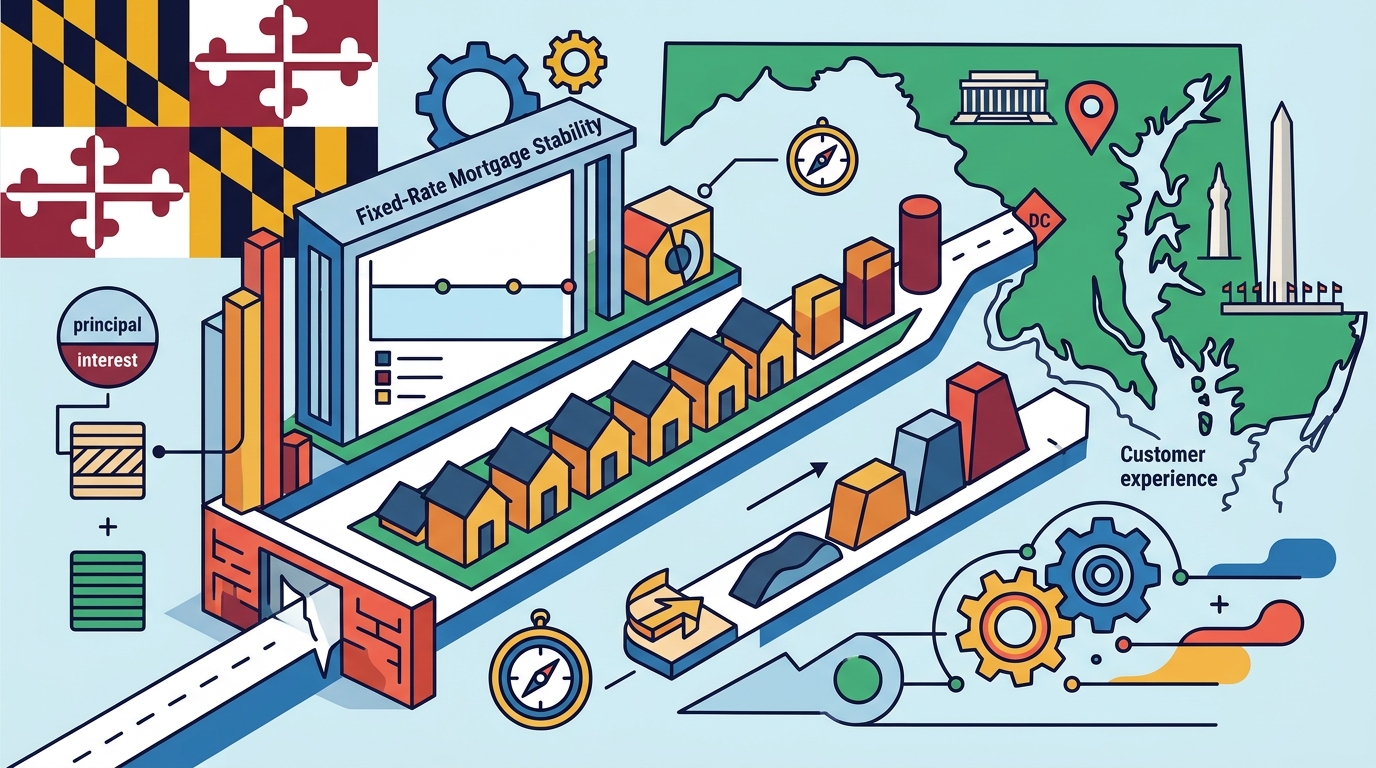
A fixed-rate mortgage is a loan where the interest rate remains constant for the entire duration of the term. This structure provides maximum predictability for budgeting, as the principal and interest portion of the monthly payment never changes. For buyers planning to stay in their homes for more than seven years, this stability often outweighs the slightly higher initial rate compared to adjustable options. For additional details, review the Customer Experience.
Adjustable-Rate Mortgages: Flexibility and Risk
ARMs carry the risk of payment shock when the rate adjusts upward. However, they are ideal for investors or buyers who plan to sell or refinance before the first adjustment date. In the Maryland market, where property values have remained resilient, ARMs can be a strategic tool for short-term ownership horizons. For additional details, review the Frequently Asked Questions.
Government-Backed Loans: FHA and VA Options
A government-backed mortgage is a loan insured or guaranteed by a federal agency, such as the Federal Housing Administration (FHA) or the Department of Veterans Affairs (VA). These loans typically require lower down payments and have more flexible credit requirements than conventional loans. For first-time buyers in Maryland with limited savings, FHA loans often provide the most accessible entry point into homeownership. For additional details, review the About.
Jumbo Loans: Financing High-Value Properties
A jumbo loan is a mortgage that exceeds the conforming loan limits set by the Federal Housing Finance Agency. In Maryland, particularly in high-cost areas like Montgomery County and Prince George's County, jumbo loans are common for properties priced above the conforming limit. These loans typically require higher credit scores and larger down payments, often 20% or more.
Jumbo loans are not government-backed, which means they carry different underwriting standards. Borrowers must demonstrate strong financial reserves and stable income. For investors purchasing multi-family properties or luxury homes in the DC metro area, jumbo financing is often the only viable structure to secure the necessary capital.
Hybrid and Specialized Structures
Key Takeaways
- Adjustable-rate mortgages (ARMs) provide lower initial payments but carry adjustment risk.
- Jumbo loans are required for high-value properties in Maryland and typically demand stronger financial profiles.
- Hybrid structures allow for customized terms based on specific financial goals and timelines.
- Choosing the right structure depends on your time horizon, income stability, and risk tolerance.
Frequently Asked Questions
What is the most common mortgage structure in Maryland?
The 30-year fixed-rate mortgage is the most common structure in Maryland due to its payment predictability and widespread availability.
Can I switch from an ARM to a fixed-rate loan?
Yes, you can refinance an ARM into a fixed-rate loan before the rate adjusts, provided you meet the lender's qualification requirements.
Do VA loans require private mortgage insurance?
No, VA loans do not require private mortgage insurance (PMI), which can save borrowers significant monthly costs.
What is a jumbo loan limit in Maryland?
Jumbo loan limits in Maryland vary by county and are set annually by the Federal Housing Finance Agency based on local median home prices.
How does Infinite Home Lending help choose a structure?
Conclusion
Selecting the right mortgage structure is a critical financial decision that impacts your wealth building for decades. By understanding the differences between fixed, adjustable, government-backed, and jumbo loans, you can make an informed choice that aligns with your unique circumstances. Infinite Home Lending provides the expertise and tools necessary to navigate these options effectively in the Maryland, DC, and Virginia markets. To plan your visit, for a personalized consultation.