
Understanding the Core Differences
In the DMV region, the housing market is highly competitive. Buyers often face unique challenges, such as high property taxes in Montgomery County or specific zoning rules in DC. Brokers bring local expertise to the table. They understand the nuances of regional underwriting guidelines that large national banks may overlook. This local knowledge can save buyers significant time and money during the approval process. For additional details, review the About.
Mortgage Brokers: Strengths and Limitations
Brokers excel in rate shopping. They have access to wholesale rates that are often lower than retail rates offered directly by banks. For a buyer in the DMV, this can mean saving thousands of dollars over the life of the loan. Infinite Home Lending specializes in navigating these wholesale channels to secure competitive terms for our clients. The primary strength of a broker is among the ability to match a borrower's unique profile with the most suitable loan product.
However, brokers have limitations. They do not hold the funds themselves, so the final approval rests with the lender. This can sometimes lead to delays if the chosen lender has strict underwriting standards. Additionally, not all brokers are created equal. Some may prioritize their own commission over the client's best interest. It is essential to work with a transparent broker who explains many fees and incentives clearly.
Direct Banks and Credit Unions: The Case for Convenience
Comparison Table: Brokers vs Direct Lenders
| Criteria | Mortgage Broker | Direct Bank/Credit Union |
|---|---|---|
| Rate Access | Wholesale rates from multiple lenders | Retail rates from one institution |
| Product Variety | High (Conventional, FHA, VA, Jumbo) | Limited to in-house products |
| Local Expertise | High (DMV specific knowledge) | Variable (National or regional focus) |
| Convenience | Requires coordination with lenders | High (Single point of contact) |
| Fee Structure | Broker fee or lender-paid commission | Origination fees and closing costs |
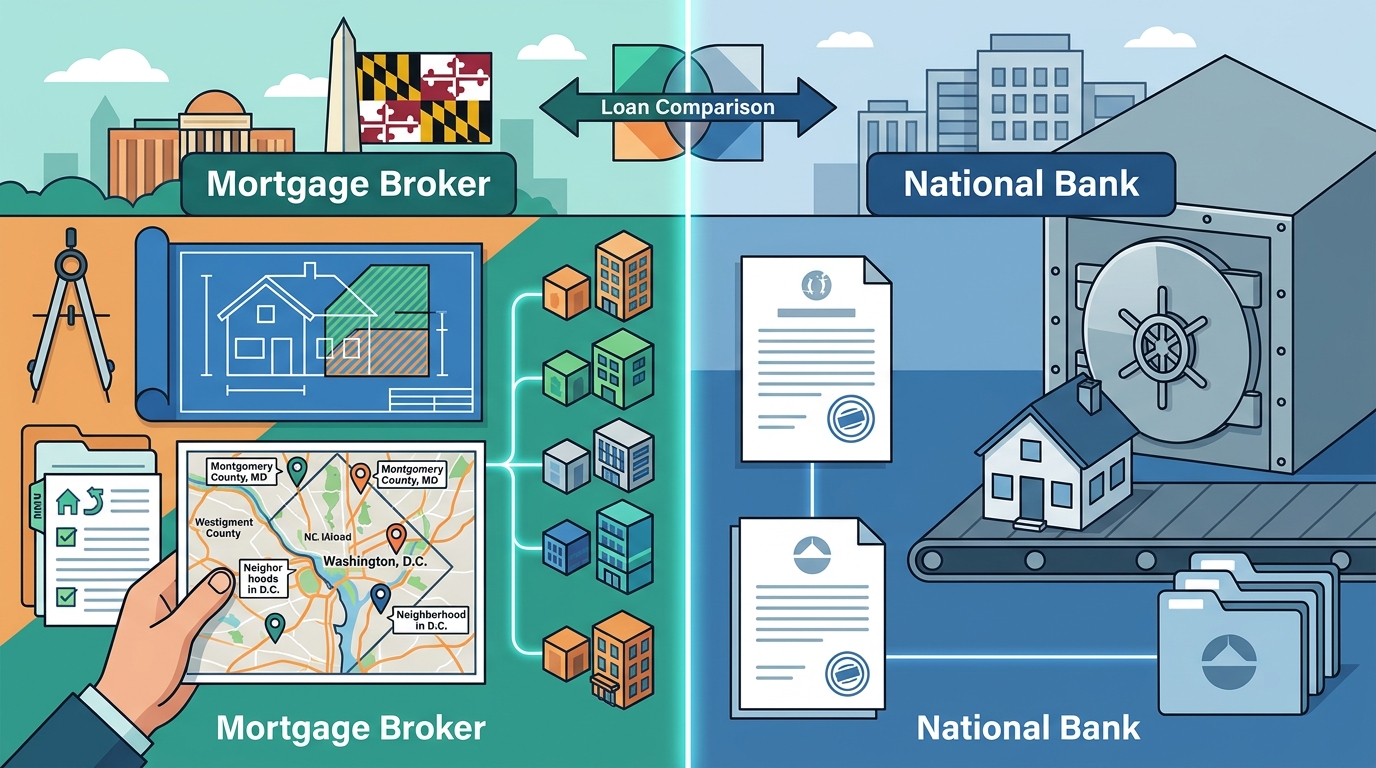
Choosing the Right Path for Your DMV Purchase
Choose a mortgage broker if you are a first-time buyer, a self-employed individual, or an investor with a complex financial profile. Brokers can navigate the nuances of non-traditional income and find specialized loan programs that banks might reject. If you are buying in a high-cost area like Bethesda or Alexandria, a broker's ability to negotiate points and rates can offset the higher property costs. Infinite Home Lending is particularly well-suited for buyers who want a strategic partner to guide them through the entire process.
Choose a direct bank if you have a very strong credit score, a large down payment, and a simple employment history. If you already have a long-standing relationship with a local credit union in Maryland or DC, their loyalty discounts may outweigh the benefits of shopping around. The process will be faster and more predictable. However, be prepared to accept their terms without the ability to negotiate against competitors.
Frequently Asked Questions
Do mortgage brokers charge more than banks?
Not necessarily. Brokers often earn their fee from the lender, so the borrower may pay no direct fee. However, the interest rate might be slightly higher to compensate the broker. Banks charge origination fees directly. You must compare the total cost of the loan, including points and fees, to determine which is cheaper.
Can I switch from a bank to a broker after starting?
Yes, but it may restart the clock. If you have already submitted a full application to a bank, switching to a broker means starting a new application with a different lender. This can affect your credit score if multiple hard inquiries occur in a short period. It is best to decide on your path before submitting any documents.
Are brokers more expensive in the DMV region?
Broker fees are generally consistent across the country, but the value they provide in the DMV is higher due to market complexity. The cost of a broker is often offset by the savings found through rate shopping. In competitive markets like DC, a broker's negotiation skills can save buyers more than the fee costs.
What if a broker's lender denies my application?
A good broker will immediately pivot to another lender in their network. This is a key advantage over direct banks. If a bank denies you, you are out of options with that institution. A broker can try a different lender with different underwriting guidelines, increasing your chances of approval.
How long does the process take with a broker vs a bank?
The timeline is similar for both, typically 30 to 45 days. However, brokers may take slightly longer initially to shop for the best rate. Once the lender is selected, the speed is comparable. Delays usually occur during the underwriting phase, regardless of who you work with.
Final Thoughts
Selecting the right mortgage partner is a strategic move that impacts your financial future. For most DMV homebuyers, the flexibility and expertise of a mortgage broker provide a significant advantage. Infinite Home Lending is committed to helping you navigate the complexities of the regional market with confidence. We focus on aligning your financial options with your individual goals, not just the lowest interest rate. To begin your journey, visit our website to explore our services and connect with our team.